
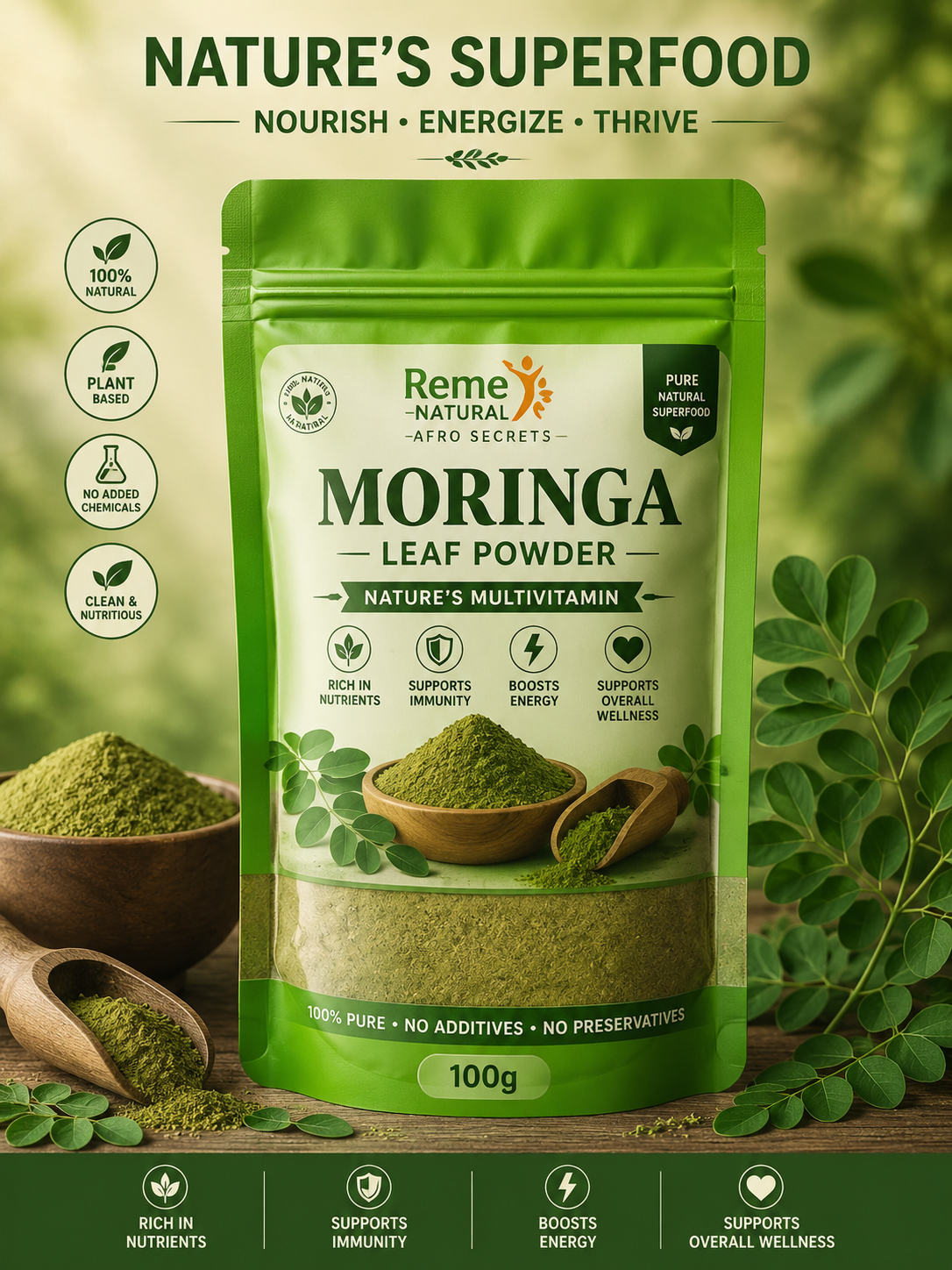
Benefits of Moringa
Moringa is often called a “nutrient-dense” plant because its leaves contain vitamins, minerals, antioxidants, protein, and fiber.
Nutritional Benefits
- Rich in vitamin A, which supports vision and immunity
- Contains vitamin C, which helps collagen production and antioxidant protection
- Provides calcium for bones and teeth
- Contains potassium, magnesium, and iron
- Supplies plant protein and amino acids
Antioxidant Benefits
- Contains antioxidants such as quercetin and chlorogenic acid
- Helps protect cells from oxidative stress
- May support healthy aging
Skin and Anti-Aging Benefits
- Supports collagen formation through its vitamin C content
- Antioxidants may help protect skin from environmental damage
- May help maintain healthy skin appearance
- Contains nutrients that support skin repair
Heart Health Benefits
- May help support healthy cholesterol levels
- May support normal blood pressure when combined with a healthy lifestyle
- Provides antioxidants beneficial for cardiovascular health
Blood Sugar Support
- Some studies suggest moringa may help support healthy blood sugar levels
- Best used alongside a healthy diet and exercise, not as a replacement for medical treatment
Digestive Benefits
- Provides fiber that supports digestive health
- May help promote regular bowel movements
Immune Support
- Rich in vitamins, minerals, and antioxidants that support normal immune function
Moringa for Wellness and Healthy Aging
Many people use moringa as part of a wellness routine because it:
- Provides broad nutritional support
- Helps fill nutrient gaps in the diet
- Supplies antioxidants that help protect cells
- Supports overall health and vitality
Common Ways to Use Moringa
- Moringa leaf powder in smoothies or porridge
- Moringa tea
- Moringa capsules
- Fresh moringa leaves in soups and vegetables
A typical daily amount is 1–2 teaspoons (about 2–5 g) of moringa leaf powder, though individual needs vary.



Reviews
There are no reviews yet.